Malicious npm Package Steals WhatsApp Messages via Ghost Pairing | Terra System Labs
Open source is built on trust. Developers install packages assuming they do what they claim and nothing more. Recent investigations have shown how dangerous that assumption can be.
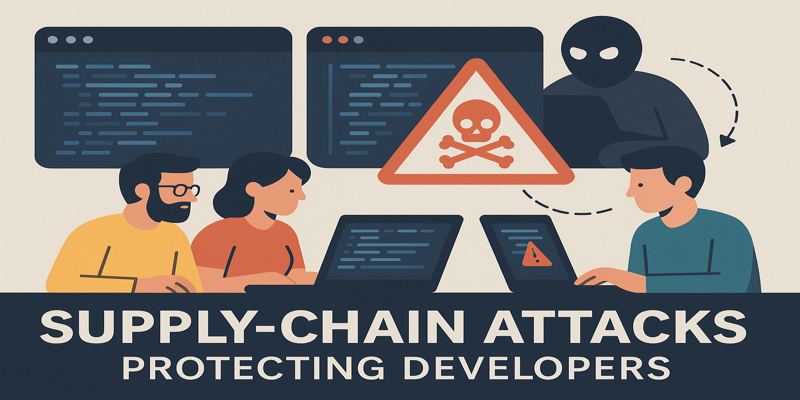
Security researchers uncovered a malicious npm package that pretended to be a WhatsApp API helper. The package gained popularity, crossing more than 56,000 downloads, before its real purpose became clear. Once installed, it quietly enabled attackers to access WhatsApp messages and take over accounts without triggering obvious warnings.
At Terra System Labs, we reviewed the technical findings and real world impact of this incident to explain what happened, why it matters, and how organizations can protect themselves.
What actually happened
The malicious package was uploaded to the npm registry with a name and description that suggested it was useful for WhatsApp integrations and automation. Developers working on chatbots, customer support tools, or internal messaging features installed it like any other dependency.
Hidden inside the code was logic designed to abuse WhatsApp’s linked devices feature. Instead of helping developers, the package silently connected an attacker-controlled device to the victim’s WhatsApp account.
From that moment on, the attacker could read messages, monitor conversations, and maintain access without needing passwords or one-time codes.
Understanding the Ghost Pairing technique
WhatsApp allows users to link multiple devices to the same account. This is a legitimate feature meant to improve usability. The attack took advantage of that design.
Here is how the flow typically worked:
-
A developer installs the malicious npm package
-
The application runs the package during normal operation
-
The hidden code initiates a device pairing process in the background
-
An attacker’s device becomes a trusted linked device
-
Messages start syncing automatically to the attacker
The victim is often unaware because the pairing does not always produce clear alerts. Even changing the account password does not necessarily remove the linked device.
Why this attack is especially concerning
This campaign stands out because it avoids many common security controls.
There is no phishing email.
There is no stolen password.
There is no obvious malware alert.
Instead, trust in the software supply chain is abused. Once the dependency is inside the application, the attacker blends in as a legitimate WhatsApp device.
For businesses, this means sensitive conversations, customer data, and internal communications can be exposed without clear signs of compromise.
Why npm remains a high value target
The npm ecosystem is one of the largest software registries in the world. That scale makes it powerful but also risky.
Common issues attackers rely on include:
-
Developers trusting package names and download counts
-
Transitive dependencies pulling in code no one reviews
-
Obfuscated JavaScript hiding malicious behavior
-
Limited runtime monitoring in many Node.js deployments
A single malicious package can spread quickly across thousands of projects.
Who should be worried
Organizations are at higher risk if they:
-
Use WhatsApp APIs or automation tools
-
Build chatbots or messaging based customer workflows
-
Install dependencies without security review
-
Lack visibility into application runtime behavior
Industries that rely heavily on messaging platforms, such as e commerce, fintech, healthcare, and SaaS providers, are especially exposed.
Warning signs to look for
While this attack is stealthy, some indicators can still help detect it:
-
Unknown linked devices in WhatsApp settings
-
Suspicious outbound network connections from Node.js apps
-
Unfamiliar or recently added npm packages
-
Heavily obfuscated code inside node_modules
Any of these should trigger an immediate investigation.
Practical defense guidance from Terra System Labs
Supply chain security does not require abandoning open source. It requires using it responsibly.
Key controls we recommend include:
-
Strict dependency version pinning
-
Avoiding unofficial or poorly maintained WhatsApp libraries
-
Automated scanning of npm packages for malicious patterns
-
Monitoring outbound traffic from application servers
-
Locking down CI and CD pipelines to prevent silent dependency changes
On the WhatsApp side, regularly reviewing linked devices and removing anything unfamiliar is critical.
How Terra System Labs supports organizations
Terra System Labs helps organizations reduce supply chain risk through hands on security services, including:
-
Secure code reviews for JavaScript and Node.js applications
-
Open source dependency risk assessments
-
Red team simulations focused on supply chain abuse
-
CI and CD security hardening
-
Continuous security monitoring and alerting
-
Developer security awareness training
Our work aligns with global standards such as OWASP, NIST, and ISO based security controls.
Final thoughts
This incident is a reminder that modern attacks do not always look like classic hacks. Sometimes they arrive as helpful tools, quietly doing harm in the background.
Trusting open source without verification is no longer safe. Software supply chain security is now a core business requirement, not an optional extra.
If you rely on npm packages, messaging integrations, or developer automation, now is the time to review your exposure.
Recent Posts